 Insider know-how
Krabi: history, coastline and change – from an ancient trading world to today's boat tours
13 min readUpdated:
Krabi is much more than turquoise water and limestone cliffs. Thailand's Andaman coast brings together a long history of settlement with rivers, mangroves, caves, islands and sea routes. Anyone searching for a Krabi boat tour today is following a geographical logic that mattered long before tourism: rivers and sheltered bays linked the hinterland to the coast, and the Andaman Sea connected Krabi to far-reaching networks of exchange. This article traces the story from archaeological evidence inland to Krabi's role as a travel destination and shows how to read island and boat trips today. Historical claims rest on the sources listed at the end and state their limits.
Contents
The landscape that shaped Krabi's history
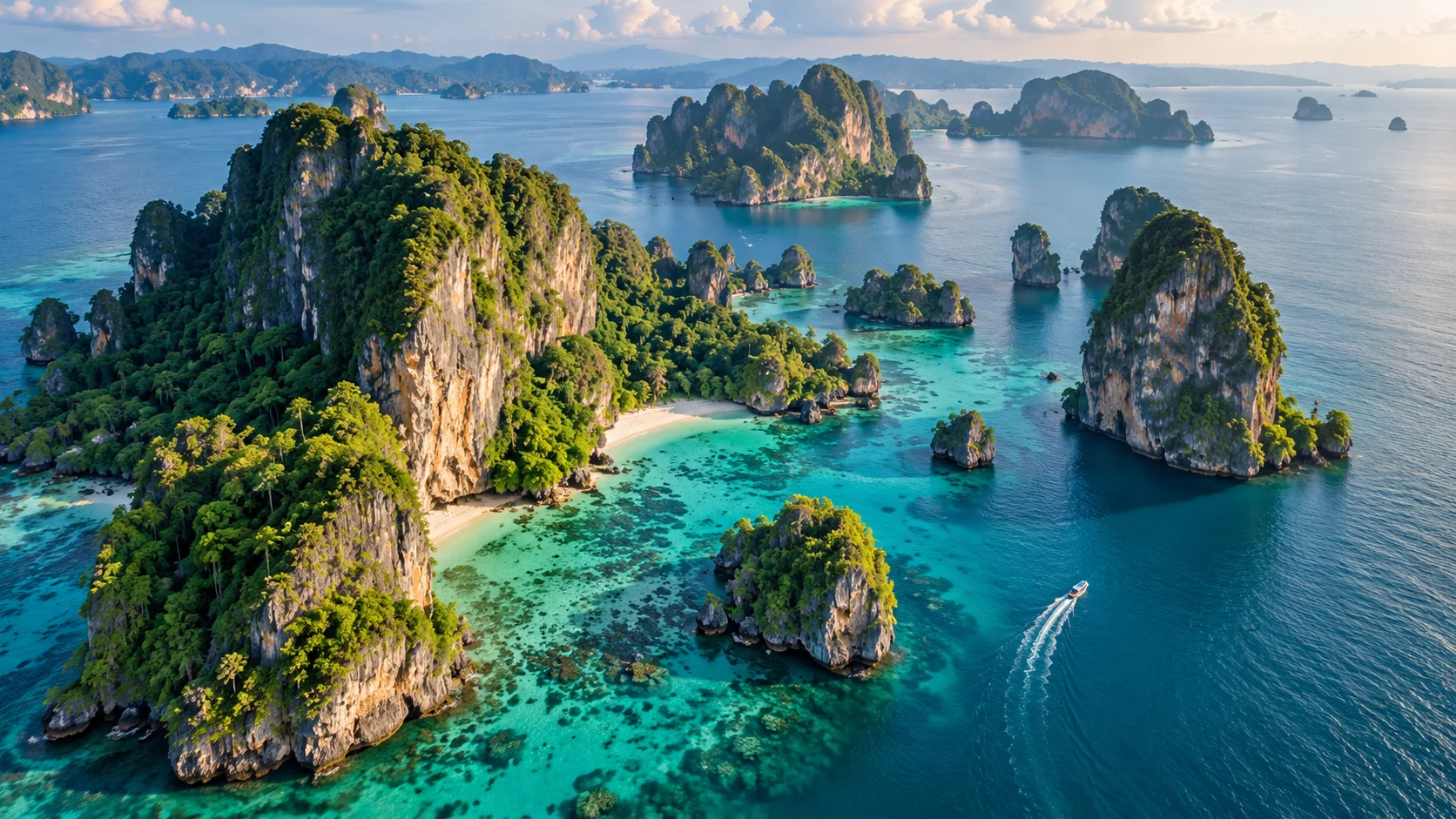
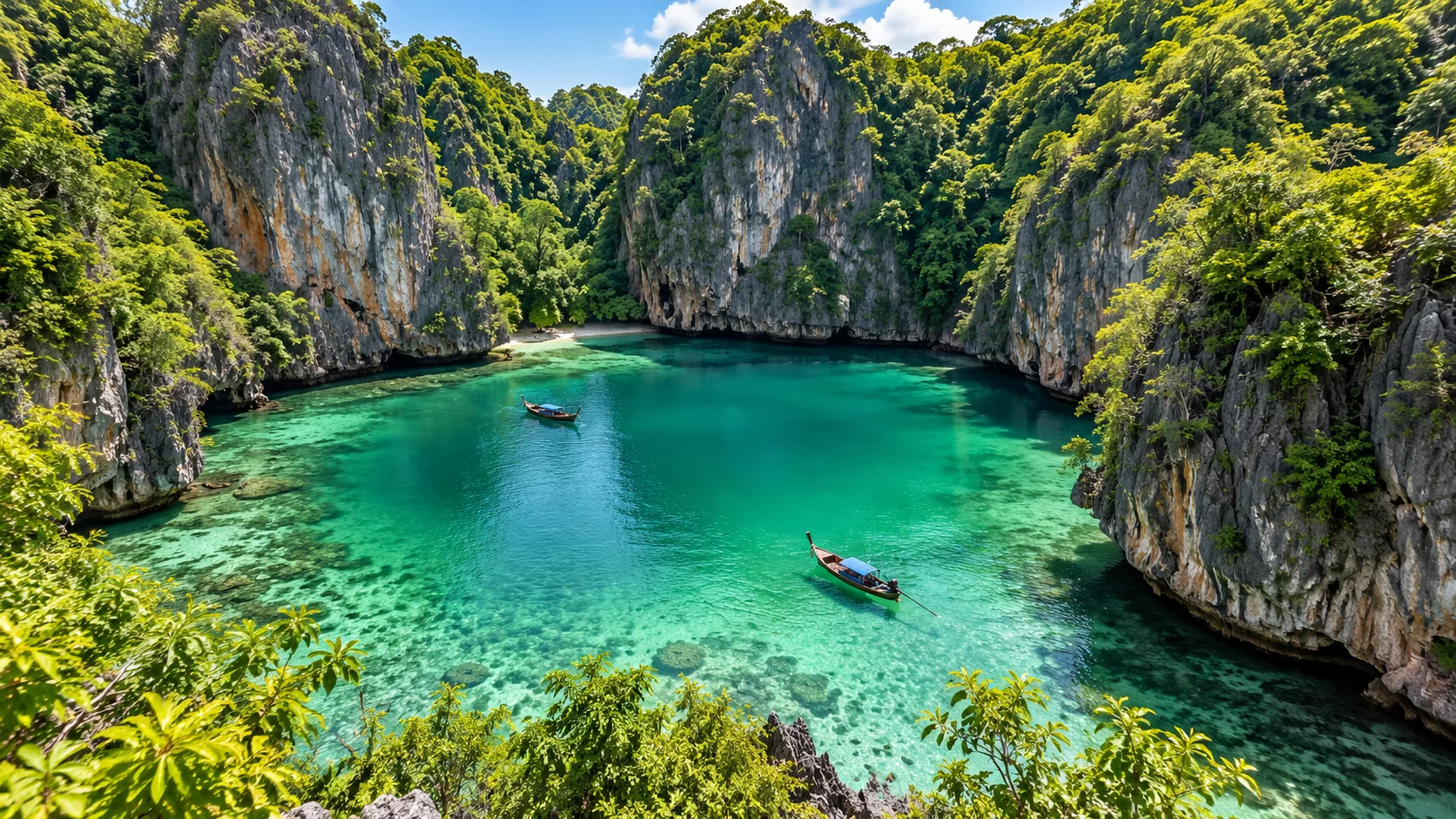
It is difficult to tell Krabi's story without talking about its landscape. The province lies on the Andaman Sea and is known for steep limestone hills, offshore karsts, bays, river channels and mangroves. This is not just a beautiful setting: the landscape shaped routes, settlements and livelihoods. Rivers carried people and goods inland from the coast, mangroves and sheltered waterways offered both habitat and access, and the islands formed part of a maritime world shaped by boats, tides and seasons.
The striking twin peaks of Khao Khanap Nam sit beside the Krabi River near Krabi Town. The Tourism Authority of Thailand (TAT) describes them as roughly 100 metres high and notes caves with stalactites and stalagmites. Human skeletons have also been found in the caves. The agency mentions flooding as one possible explanation, but presents it as a theory rather than a confirmed fact.
The river's present-day use still reflects this geography. From a pier in Krabi Town, boats carry visitors to the peaks, into the mangroves and across to the island community of Ko Klang. A boat trip there shows how town, river mouth, mangroves and neighbouring communities fit together. A short journey just outside the city tells a different story from a full-day trip to offshore islands.
Archaeological evidence: Khlong Thom and the story of the beads
One of the region's most important archaeological sites lies in Khlong Thom, southeast of Krabi Town. The area is known as Khuan Lukpad or Khuan Luk Pat, roughly translated as "Bead Mound". The name refers to the many glass and stone beads discovered there. According to the TAT, the museum at Wat Khlong Thom also displays stone tools, bronze objects, metal coins, pottery and ceramic fragments, and decorative pieces.
The site's significance goes far beyond a collection of striking objects. Archaeologist Brigitte Borell describes a find area of about 150 hectares, roughly 20 kilometres inland. The Khlong Thom River connected the site with the Andaman Sea. Excavations uncovered manufacturing debris that points to specialised work in tin, semiprecious stones and glass. This suggests that Khlong Thom was not only a place where people lived, but also an important centre of craft production.
Borell identifies an early phase from the first century BCE to the second century CE, followed by a later phase from the third to the fifth centuries CE. In her account, excavations in 2008 confirmed the settlement's residential and industrial character, as well as its role as a port connected to Indian Ocean trade networks.
Finds point to connections in more than one direction. They include Indian coins, seals bearing Indian scripts, engraved gems in Indian, Sasanian and Roman styles, and a fragment of a Chinese mirror from the Eastern Han period. These objects are evidence of exchange and far-reaching connections. They do not mean that every item travelled directly from its place of origin to Krabi, or that a single, permanently controlled trade route existed. Ports such as Khlong Thom were nodes in a network through which goods, techniques and symbols moved by way of multiple stops.
The small gold coins studied by Borell are especially revealing. Earlier interpretations had classified some examples as Roman or "Indo-Roman". Borell argues instead that they were probably locally produced. She also points out an important limitation: the three coins discussed in her paper were not recovered from a controlled excavation context. On their own, they cannot establish a precise date or prove the complete history of the site. Considered alongside production debris and other finds, however, they add to the picture of Khlong Thom as an early centre of trade and production.
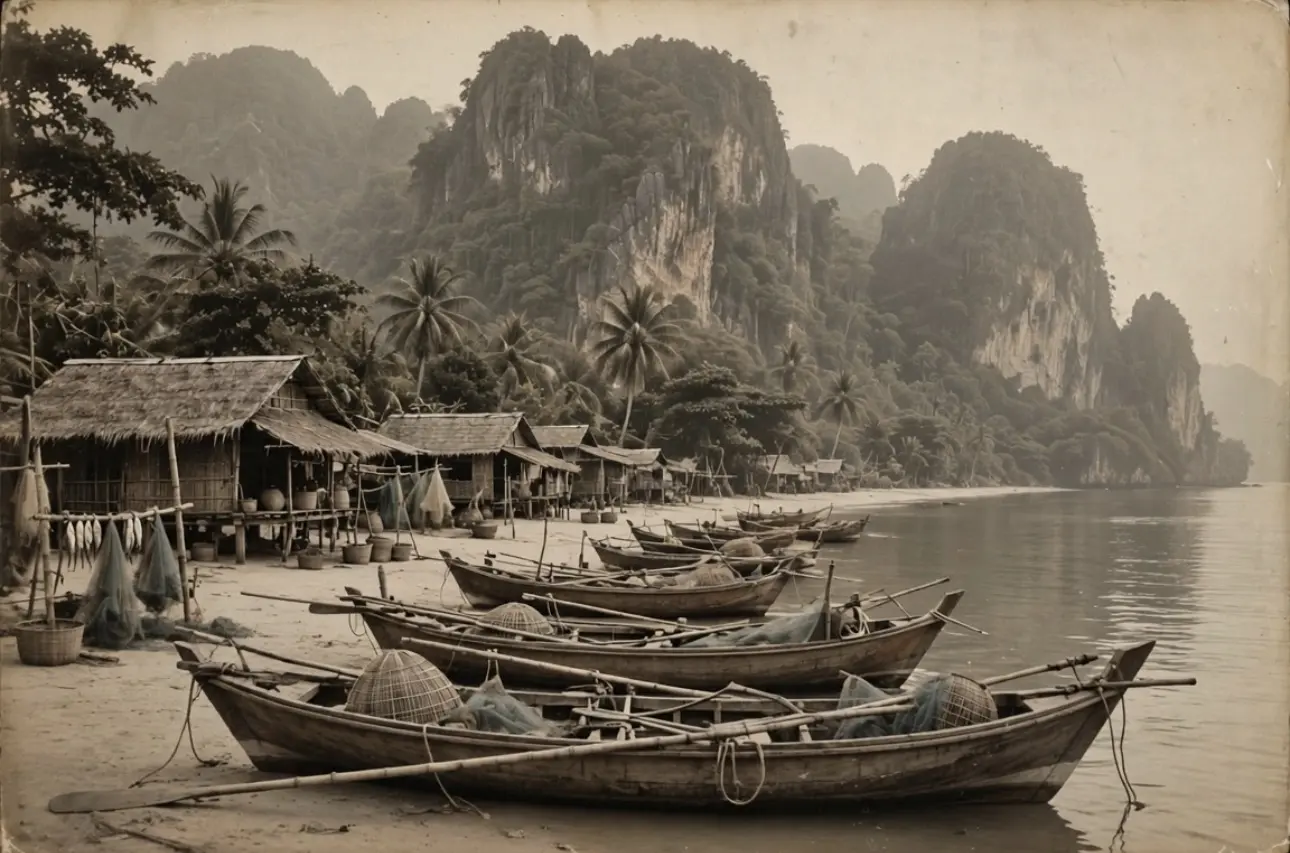
Krabi's history, then, did not begin with the rise of beach holidays. Long before today's ferries and excursion boats, the region was part of a maritime world. Khlong Thom shows that the coast did not end at the beach: rivers, workshops and ports linked the hinterland with the sea. Today's island hopping has a different purpose, leisure rather than the movement of goods, but it still depends on the same basic connection between land and water.
Caves, cliffs and traces of human life
Khao Khanap Nam is not the only place where the region's rock formations hold traces of human history. Caves can provide both shelter and access to the surrounding landscape. The TAT reports human skeletons in the caves, but without further archaeological evidence, neither a precise date nor a definitive explanation should be inferred from that discovery alone.
The coast south of town is also shaped by cliffs and caves. Around Railay and Phra Nang, natural caves, beaches and local religious meaning meet. Today, a boat trip to Phra Nang Cave Beach takes visitors to a place many experience primarily as a beach. A historical perspective, however, also calls for respect for the local uses and significance of the landscape. Not every place is simply a tourist attraction.
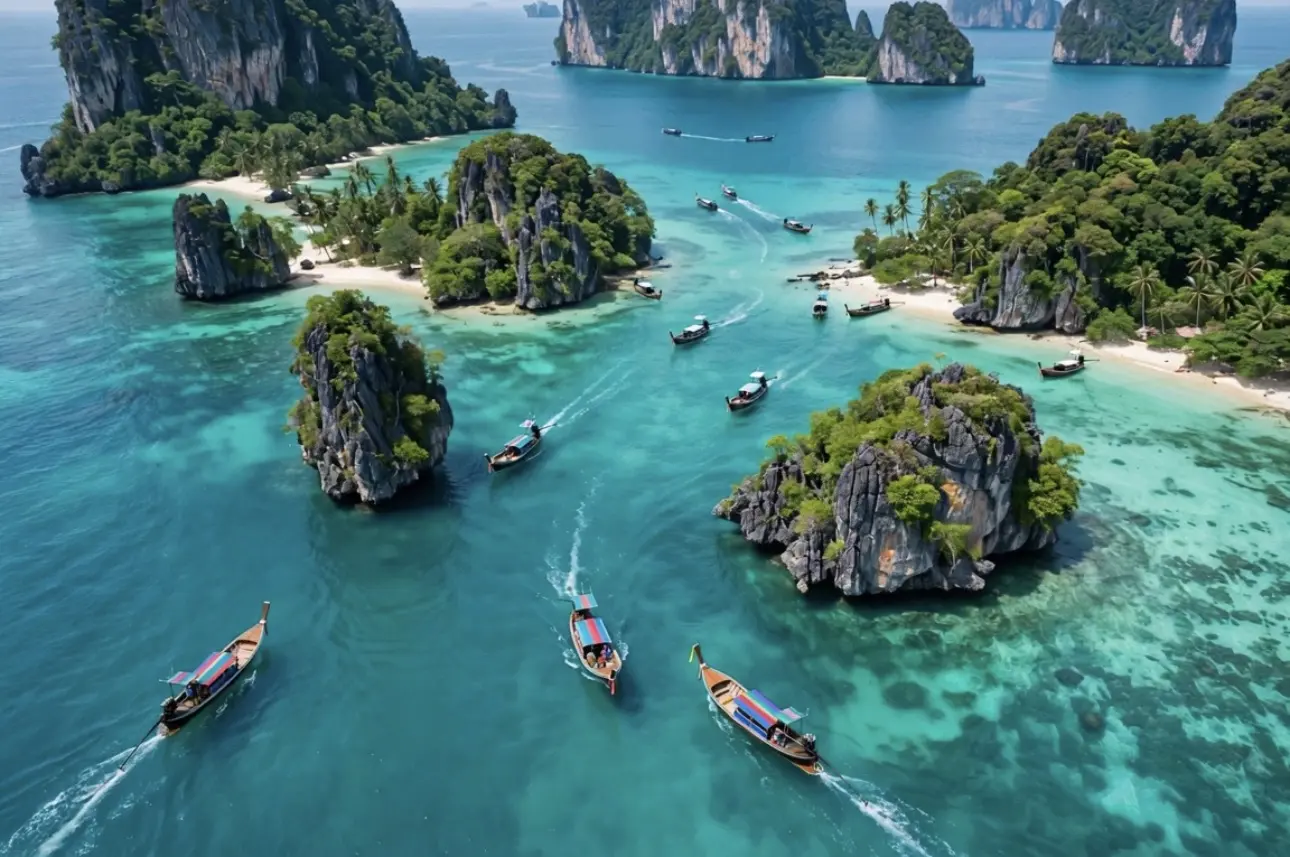
The cliffs have also shaped how people get around. Where steep limestone walls and islands interrupt overland routes, boats become practical connections. The journey from Ao Nang to the Railay peninsula shows how a form of transport has become part of the travel experience itself. The TAT describes Ao Nang as a major starting point for boat trips to nearby islands and to the beaches of Phra Nang Cape and Railay.
From regional lifeways to a travel destination
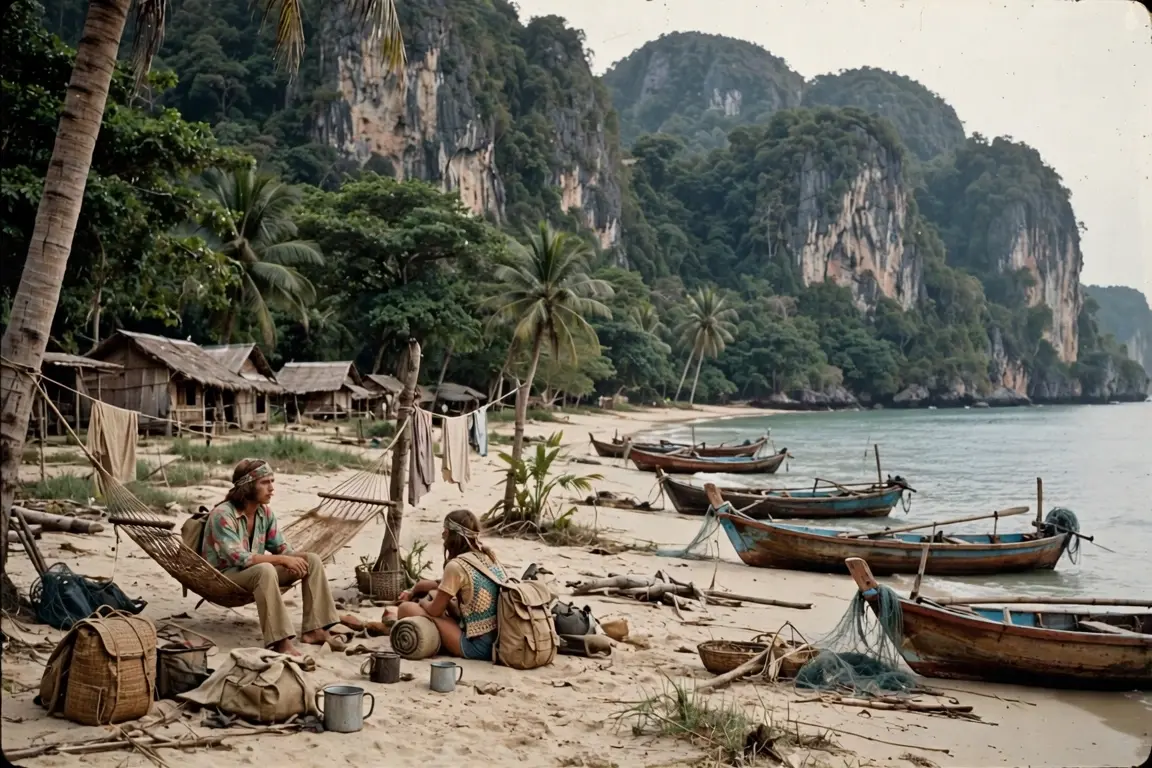
Krabi's transformation into an international destination did not simply replace older ways of life. Fishing, farming, crafts, local markets and neighbourhood networks exist alongside hotels, restaurants and tour businesses. In some places, visitors can still get a close look at everyday community life. The TAT highlights Ban Ko Klang, an island community in a mangrove area where community activities include traditional boatbuilding and crafts. It also describes Laem Sak as a community where Thai Buddhist, Thai Muslim and Thai Chinese traditions meet.
These examples are a reminder that Krabi cannot be reduced to one culture or way of life. The coast has long been a meeting place. Religious, linguistic and economic differences are part of the region's diversity. Visitors who only tick off islands may see just the surface. A detour into town, a visit to a market or time spent in a community can broaden the view.
As visitor numbers grew, the role of small piers and beaches changed too. Ao Nang became a central departure point for island transfers and excursions. From there, routes reach Railay, nearby islands and other destinations around the province. What is actually available depends on the season, weather, departure point, national park rules and conditions on the day.
The 2004 tsunami: a turning point
The December 2004 tsunami was a devastating turning point for the Andaman coast. In 2005, the International Labour Organization (ILO) documented its human and economic effects in Krabi as well as in other affected areas. People whose income depended on beach trading, hotels and other tourism services were among those affected. Recovery was not just a matter of rebuilding structures and infrastructure; it also meant restoring jobs and livelihoods.
The ILO reported a sharp drop in hotel bookings across affected coastal areas and lost income in the tourism sector. These figures described the situation in Thailand at the time and should not be mistaken for a Krabi-specific casualty or damage tally. The larger point for Krabi's history is that tourism had become an important source of income for many households. A natural disaster could therefore affect the coastline, businesses and personal lives at the same time.
The tsunami also showed how vulnerable an economy can be when many local incomes depend on a single sector. Reconstruction and the return of visitors became part of a longer process of adjustment. Today, questions about safety, seasonality, environmental pressure and responsible travel are part of a broader conversation about tourism in Krabi.
Krabi today: islands, national parks and ways to travel
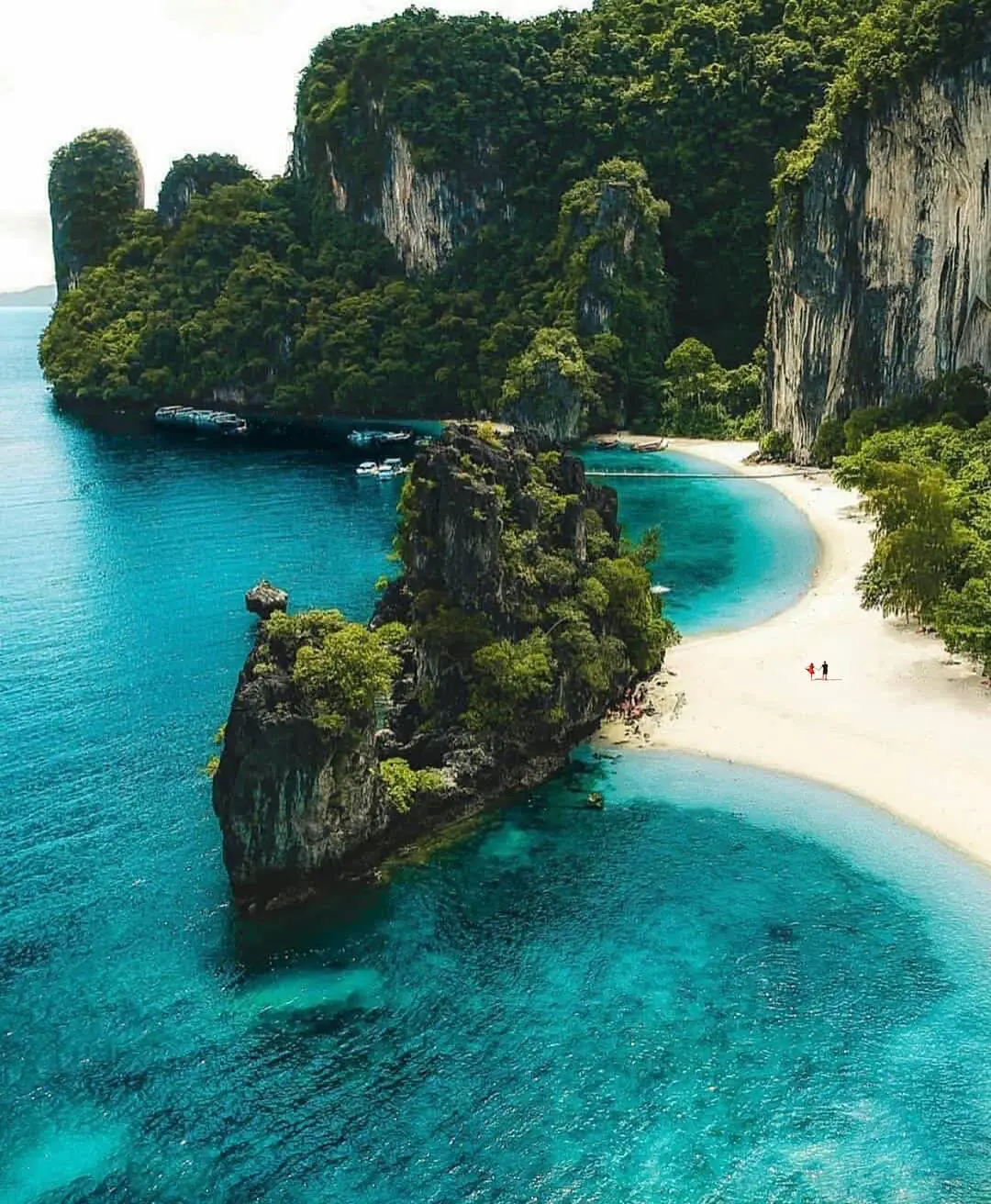
The TAT includes Phi Phi, Railay, Hong Island, Thale Waek and other places among the province's best-known natural and coastal destinations. Railay is known for its beaches and limestone cliffs. Hong Island lies within Than Bok Khorani National Park. Thale Waek refers to the sandbar that appears between several islands as the tide recedes. These destinations are not interchangeable. Each route brings different travel times, scenery and opportunities to swim or snorkel.
The familiar Krabi 4 Islands tour often links several destinations in the southern coastal area and is commonly offered from Ao Nang. The island names and order can vary by trip, so the label does not guarantee an identical itinerary. Anyone considering an Ao Nang boat tour should check the departure point, duration, planned stops, possible park fees and return time before booking.
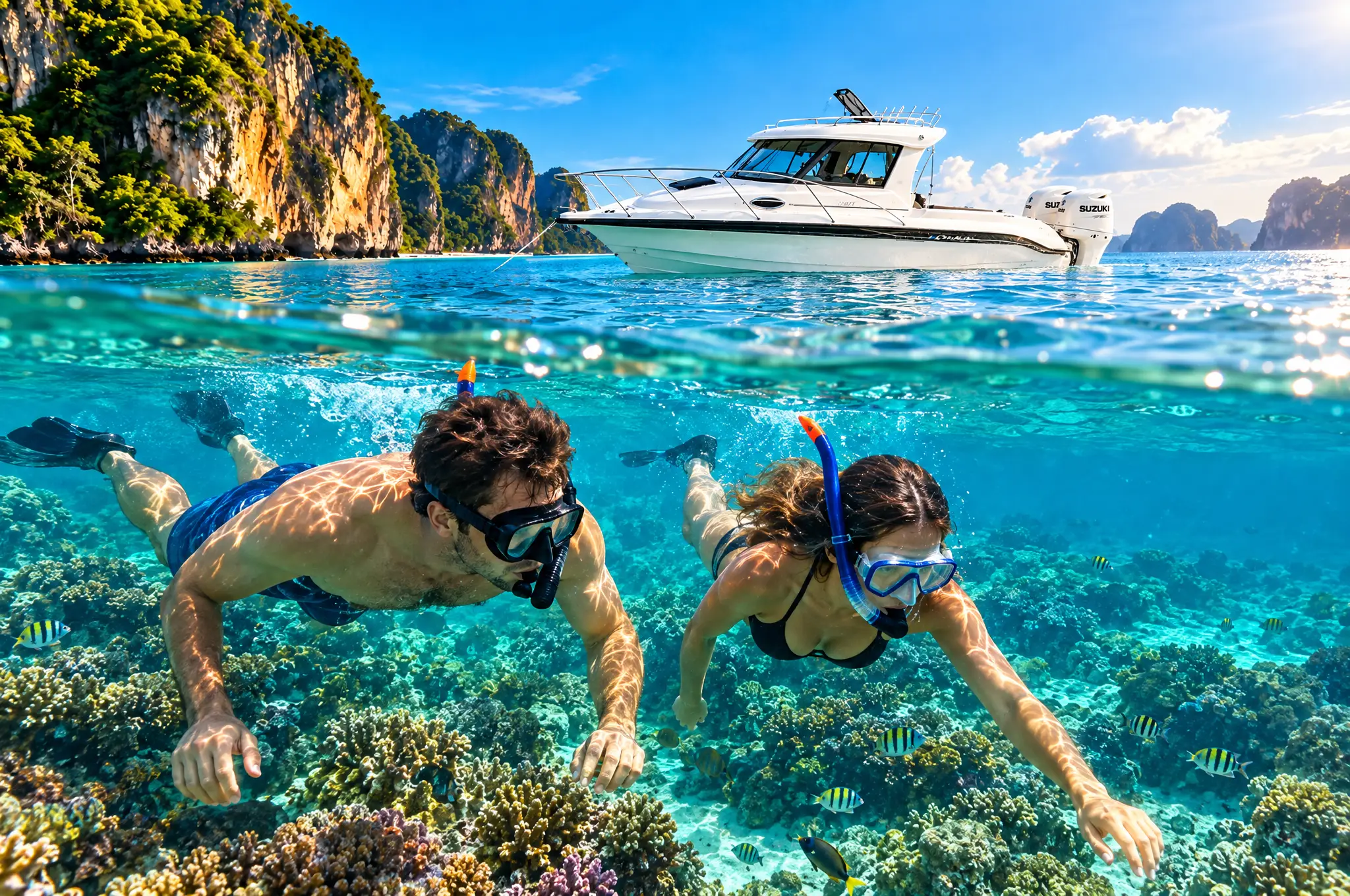
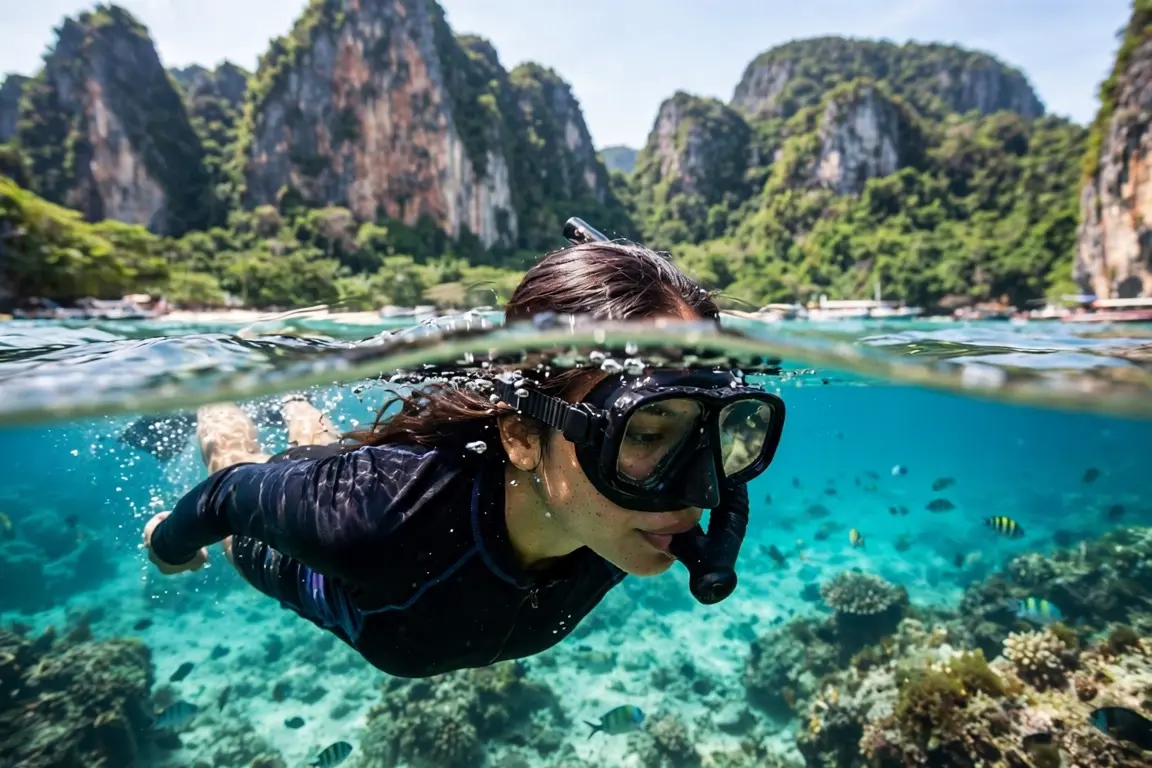
Travellers often search for a Hong Island tour when they want a lagoon, limestone scenery and time on the water. The TAT places Ko Hong in Than Bok Khorani National Park and lists nature, swimming and snorkelling among possible activities. A snorkelling tour from Ao Nang may visit these coastal and island areas, but water conditions and visibility vary. Coral reefs are fragile ecosystems. Touching or standing on coral, or feeding fish, can cause harm.
A Phi Phi tour from Krabi heads to an archipelago of distinct islands and bays. The TAT notes ferry connections from Krabi and the option of booking an organised tour. Actual journey times depend on the boat, pier, sea conditions and schedule. Travellers looking for a faster route may consider a speedboat tour. Faster boats can cover more distance in less time, but they are not automatically the most comfortable option for everyone. In rough seas, or for people prone to seasickness and families with small children, a slower alternative may be a better fit.
A sunset tour typically combines island stops with evening light and may include a swim or snorkel stop, depending on the itinerary. The search term alone does not define the route. The same is true of a Krabi sunset cruise: one listing may mean a simple ride at sunset, while another may include several stops and a longer programme. The actual itinerary matters more than a catchy title.
Longtail, speedboat or private boat?
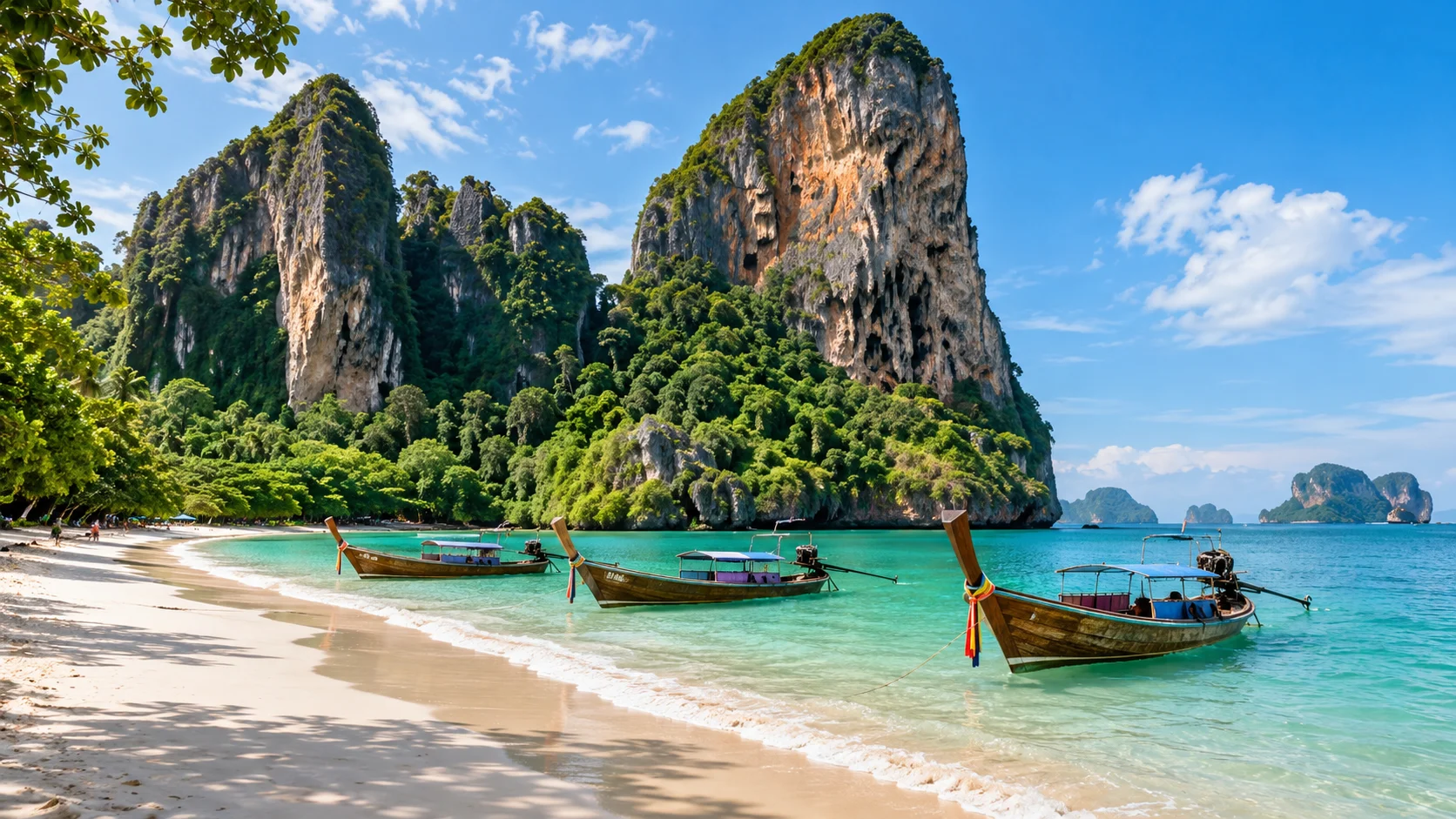
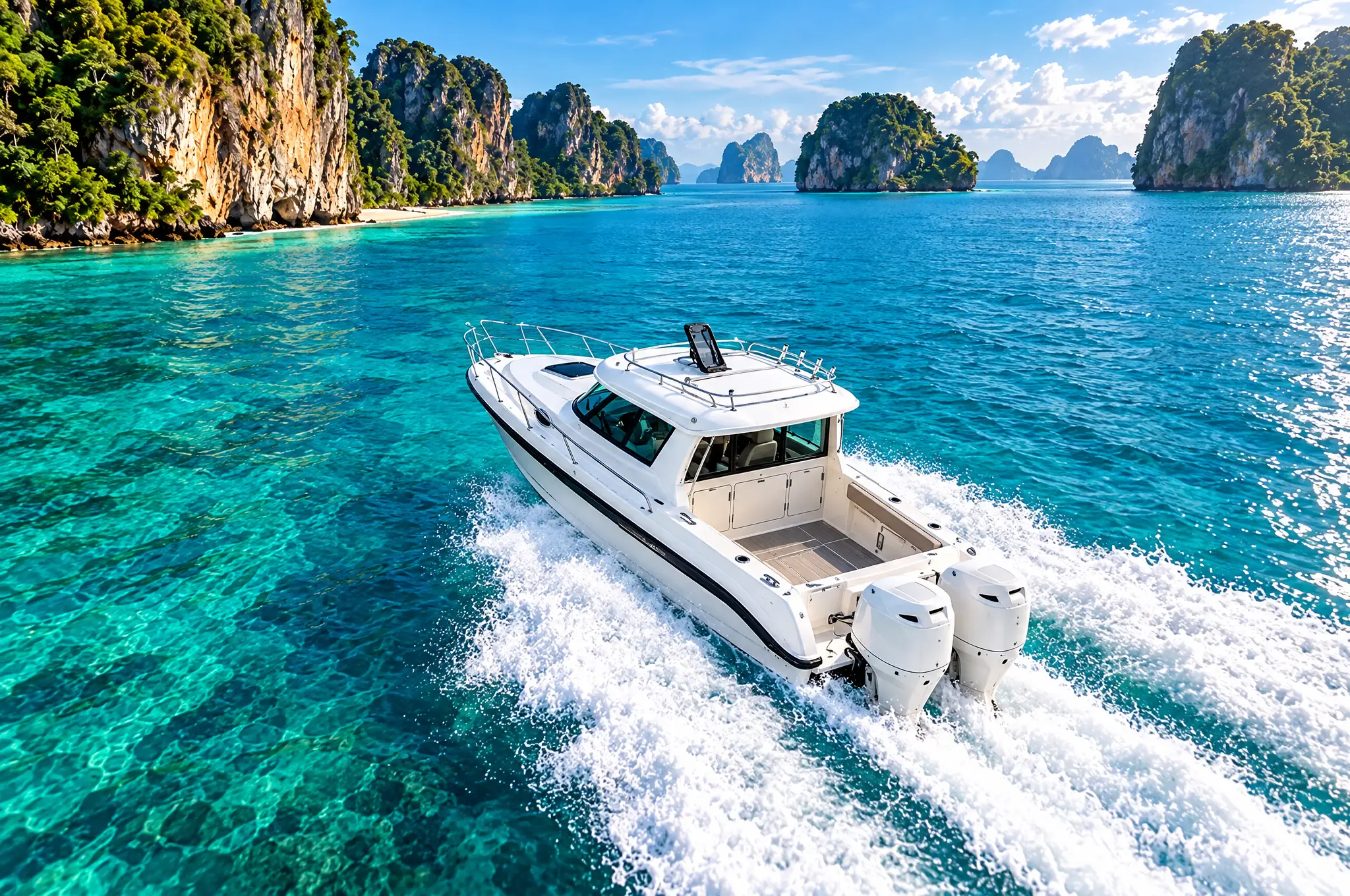
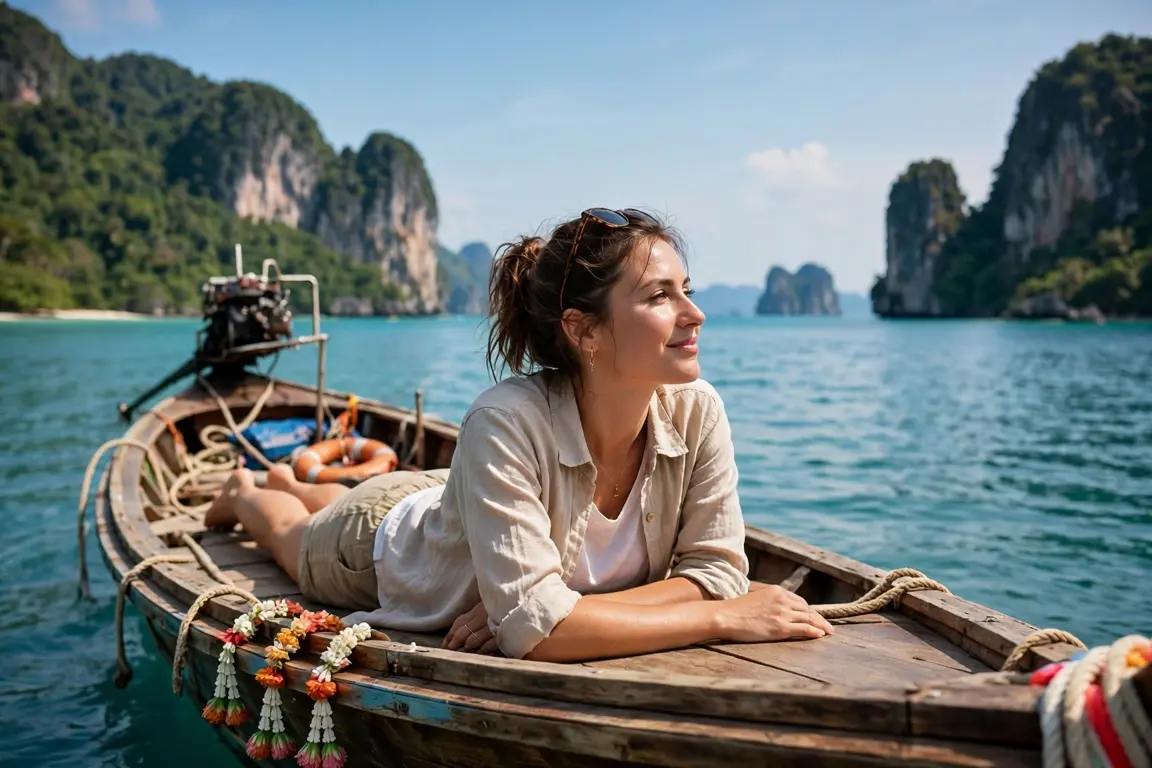
The traditional longtail boat is not just a photo opportunity in Krabi. It is also a practical way to cover short distances. We run only a private speedboat for a maximum of 5 guests; the differences are explained in the guide on longtail versus speedboat. Anyone planning a private boat tour from Ao Nang should clarify whether the price is per boat or per person, how many passengers are allowed, which stops are included and whether national park fees are extra.
With us the price is per boat for up to 5 guests. Some islands and national parks charge an entrance fee. It is not included in the tour price and is paid on site directly to the rangers. The start is possible in Ao Nang or Krabi Town.
"Luxury" is not a standardised category either. Check the boat type, shaded areas, food and drinks, safety equipment and cancellation terms. And when you see a cheap offer, do not compare only the headline price: a low-cost ticket is only a good deal if equipment, entry fees and the return journey are clearly explained. "Best boat tour in Krabi" is a search term, not an objective ranking. "Best" depends on whether someone wants to see as many places as possible, spend less time on the boat, travel with a small group or set their own pace.
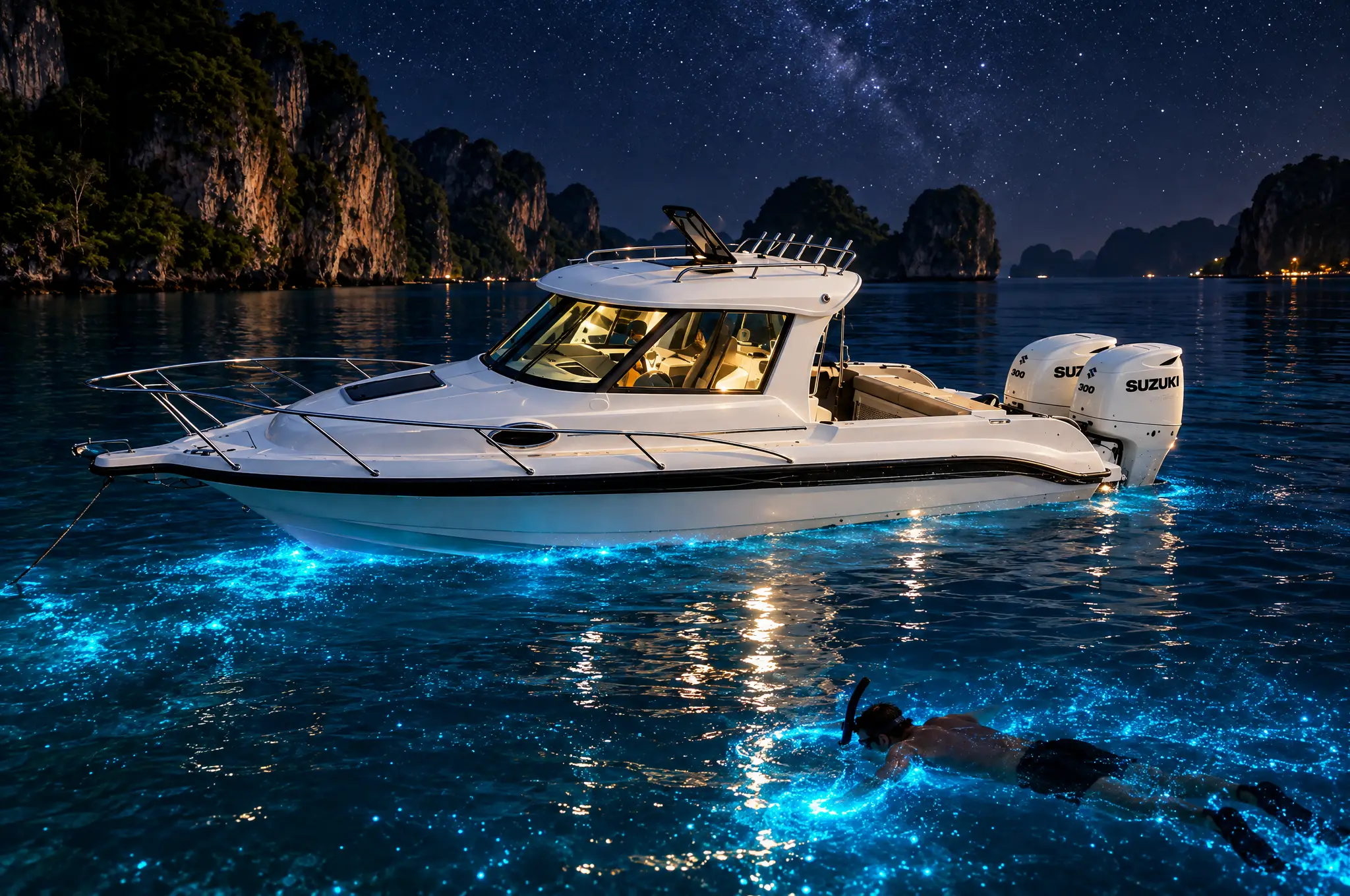
A bioluminescent plankton tour also appears as a search phrase. Bioluminescence is a natural phenomenon, and whether it can be seen depends on environmental and light conditions. No operator can guarantee a dramatic sighting in every circumstance. Anyone considering a trip focused on bioluminescence should ask about realistic expectations, environmental rules and what the excursion actually involves.
Turning a search into the right trip
If this is your first Krabi boat tour, start with three questions. First, do you want a short transfer or a full-day excursion? Second, is your main destination Railay and Phra Nang, Hong Island or Phi Phi? Third, are you happy to join a group, or is a private departure important to you?
A simple boat may suit a short, flexible coastal ride. An organised day trip may make more sense for several island stops. If you want to spend time at one particular destination, check whether the itinerary includes a longer stop or only a brief photo break. With a Krabi 4 Islands tour, it is especially useful to read the list of actual stops rather than assuming what the title includes.
During the rainy season, weather may affect schedules. Waves, visibility, tides and official restrictions can lead to last-minute changes. National park destinations may have rules or temporary closures. For any boat trip, flexible expectations matter just as much as sunscreen and drinking water. Snorkelling gear should fit and be clean, and fragile marine habitats should not be touched.
A private booking can be useful when a group is travelling together, wants to set its own pace or needs a particular departure time. It is not automatically cheaper. Group tours, meanwhile, can make arranging a boat and guide easier. The phrase "Ao Nang boat tour" tells you the starting point, but not the quality of the trip. "Private boat tour Ao Nang" alone does not reveal what is included in the price either.
Reading Krabi's history from the water
A boat ride can become a history lesson if you pay attention to the landscape. Archaeological finds at Khlong Thom show how the hinterland was connected to the sea through rivers and ports. At Khao Khanap Nam, the caves and river mouth are reminders that today's town sits within a much older landscape. Around Ko Klang, mangroves and local communities make clear that these are not decorative backdrops, but part of a lived-in and actively used coastal environment.
Today's travel industry uses boats for leisure, transfers and island visits. In earlier centuries, production and trade mattered more. These are different periods, but in both, waterways were essential. That perspective changes how you see an island hopping route: it does not pass through an empty postcard landscape, but through a coastal region with archaeological depth, everyday livelihoods and sensitive ecosystems.
Sources
The historical statements in this article rest on these sources. Where they state limits to their evidence, we have kept them in the text.
- Brigitte Borell, "Gold Coins from Khlong Thom", Journal of the Siam Society, Vol. 105 (2017)
- Tourism Authority of Thailand: Wat Khlong Thom Museum
- Tourism Authority of Thailand: Khao Khanap Nam
- Tourism Authority of Thailand: "10 Things to Do in Krabi"
- Tourism Authority of Thailand: Krabi Province
- International Labour Organization: "After the tsunami in Thailand, the tourist industry fights back", 11 April 2005
Frequently asked questions
What is Krabi's most important archaeological site?
Khlong Thom southeast of Krabi Town, also called Khuan Lukpad ("Bead Mound"). According to archaeologist Brigitte Borell it was a settlement and port with craft production in tin, semiprecious stones and glass, connected to the Indian Ocean trade network.
What is Khao Khanap Nam?
A pair of limestone peaks beside the Krabi River near Krabi Town, about 100 metres high according to the TAT, with caves. Human skeletons were found there; the circumstances are not conclusively explained.
How did the 2004 tsunami affect Krabi?
The ILO documented human and economic effects along the Andaman coast in 2005, including for people who depended on tourism. The ILO's figures describe Thailand as a whole, not Krabi alone.
Where does a boat tour in Krabi start?
The TAT describes Ao Nang as a major starting point for boat trips to nearby islands, Phra Nang and Railay. Our private speedboat starts in Ao Nang or Krabi Town.
Are the islands on the 4 Islands tour always the same?
No. The island names and order of stops can vary by trip. Read the list of actual stops rather than relying on the title.
What does a private boat tour cost and what is included?
With us from 18,500 THB per boat for the 4 Islands, for up to 5 guests and not per person. Some islands and national parks charge an entrance fee that is not included in the tour price and is paid on site directly to the rangers.
Is bioluminescence guaranteed?
No. Whether you see glowing plankton depends on environmental and light conditions. No operator can guarantee it in every circumstance.
Experience this place privately
Private speedboat from Ao Nang for a maximum of 5 guests – route and timing planned around the tides and your wishes.
These private tours visit the places in this article.
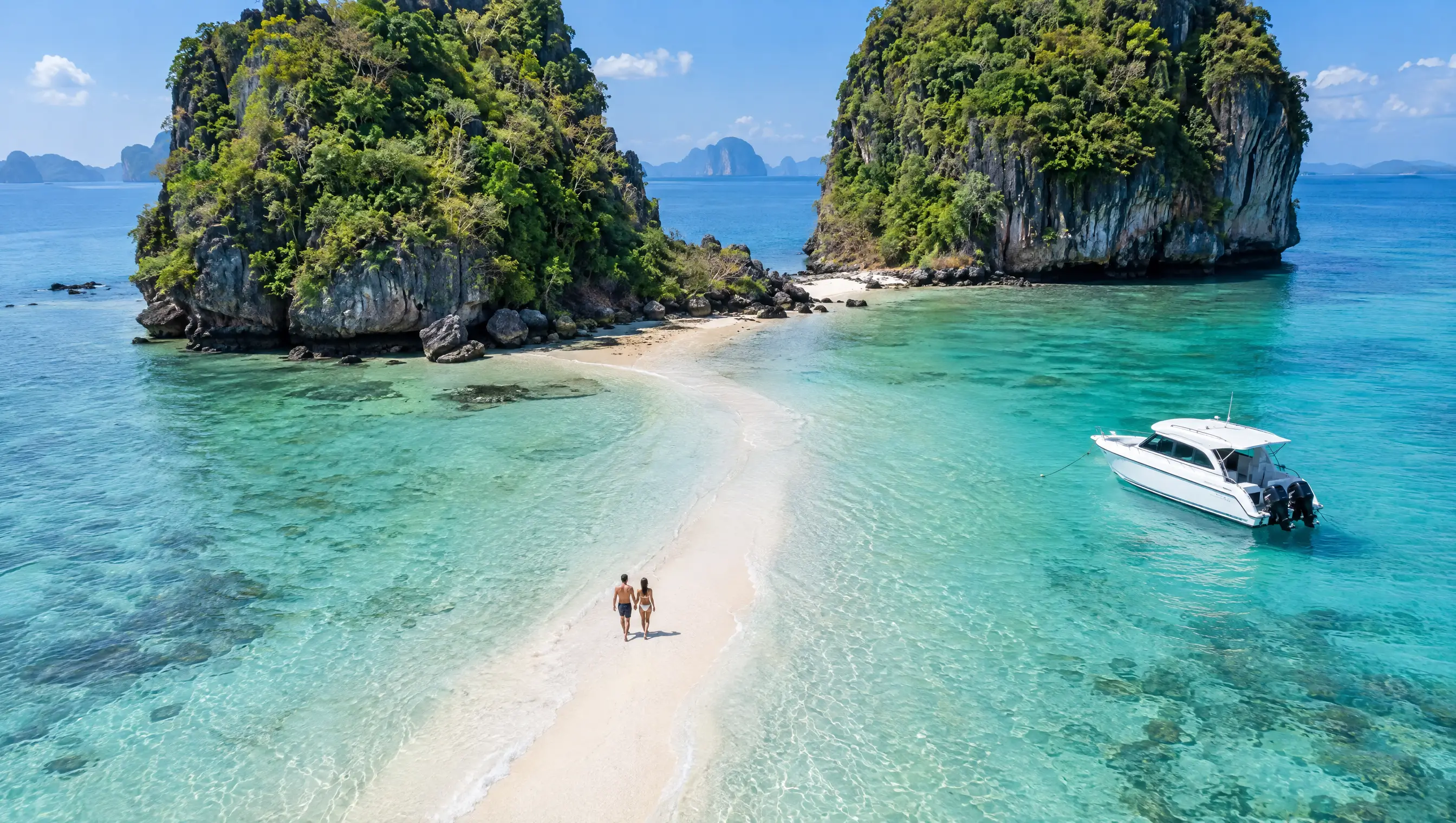 6 hrs · from 1 pm
4-Islands VIP & Sunset Special
The famous islands – but when the crowds are gone.
from ฿18,500 per boat · max. 5 guests
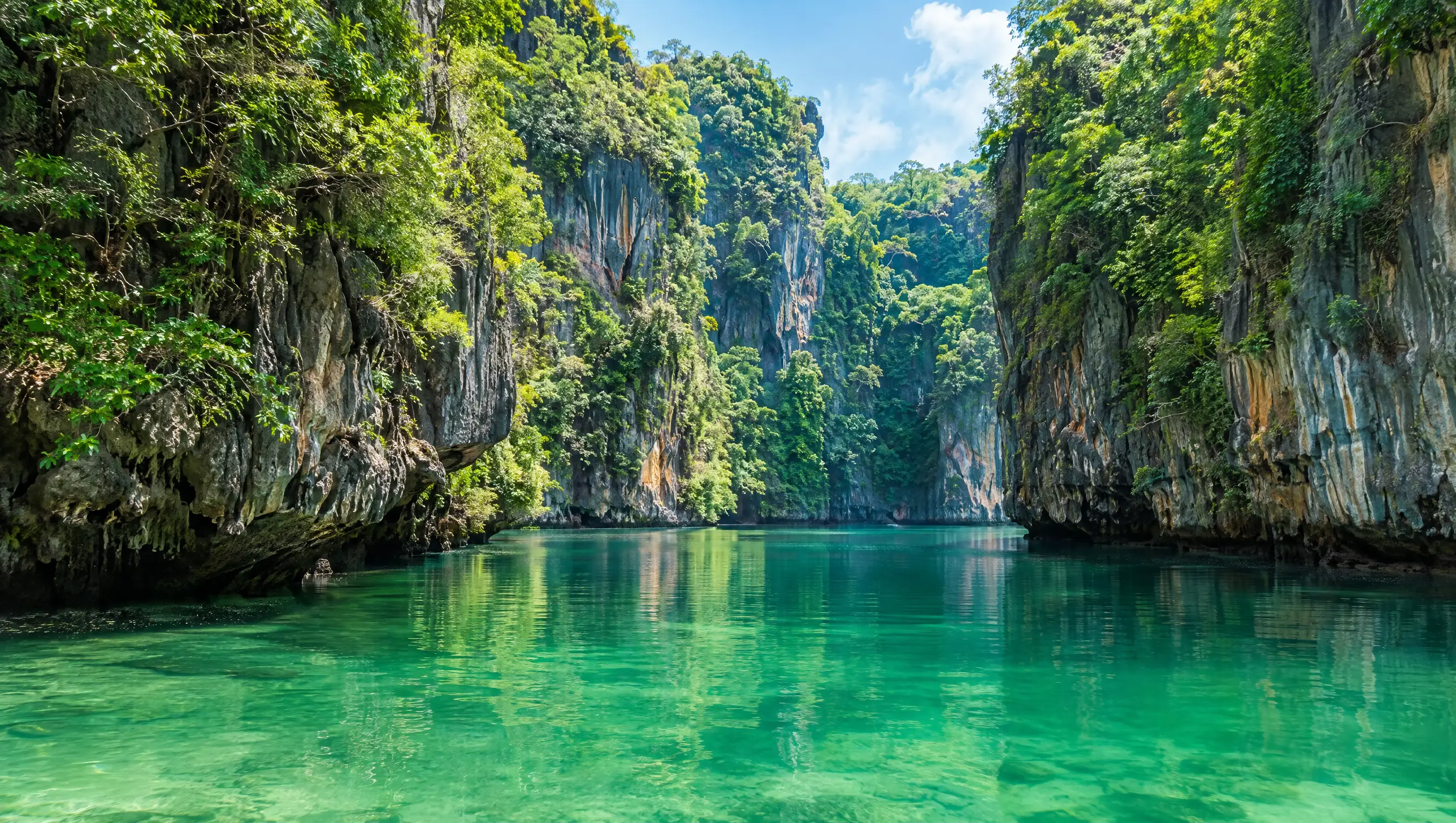 7 hrs · from 8 am
Hong Island Secret Lagoons & Hidden Bays
Emerald lagoons and bays no group boat visits.
from ฿21,500 per boat · max. 5 guests
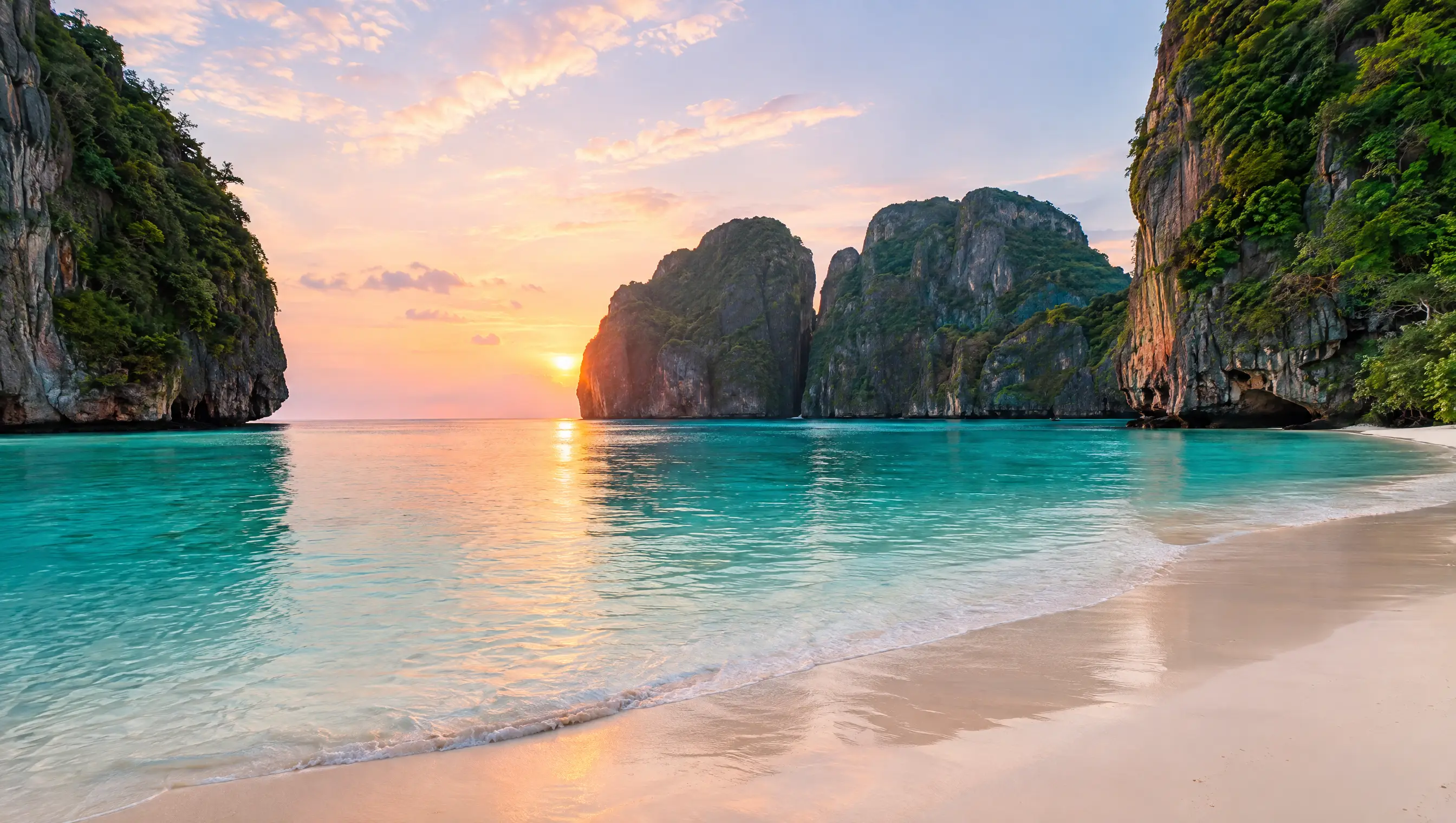 8 hrs · from 7 am
Phi Phi Early Bird – before everyone else
Maya Bay, Pileh Lagoon and Bamboo Island in the first morning light.
from ฿28,500 per boat · max. 5 guests